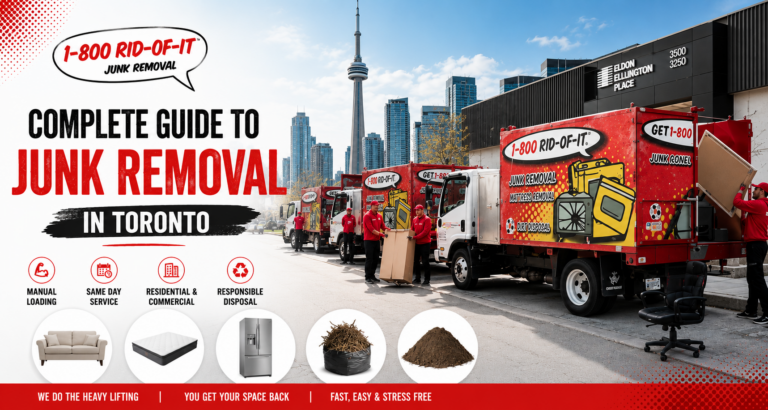

Residential junk removal is the scheduled collection, manual loading, transport, and responsible disposal of unwanted household items from residential properties. These appointment-based services help homeowners remove furniture, appliances, electronics, mattresses, renovation debris, and general household clutter without arranging transportation or multiple disposal trips themselves. Throughout Toronto and the GTA, residential junk removal appointments are commonly used during moves, renovations, downsizing projects, estate cleanouts, and seasonal decluttering.
Key Takeaway
Residential junk removal appointments provide homeowners across Toronto and the GTA with a practical way to remove unwanted household items through a scheduled, assessment-based service. A trained crew manually removes furniture, appliances, electronics, and household clutter while sorting suitable materials for donation, recycling, or responsible disposal whenever conditions allow. Pricing depends on factors such as material volume, item type, and property access. Special handling procedures apply to items such as Freon appliances, mattresses affected by bed bugs, heavy debris, and hot tubs, each of which is assessed individually rather than treated as standard household items. Curbside appointments may also qualify for a 10 percent discount on most residential junk removal services.
Why Do You Need Professional Residential Junk Removal Service?
Residential junk removal services help homeowners across Toronto and the GTA clear unwanted furniture, appliances, electronics, and general household items through scheduled appointments. Rather than arranging trucks, multiple disposal trips, or additional labour, homeowners can schedule a single appointment where trained crews complete the manual loading, transportation, and responsible disposal process. Following collection, materials are sorted for donation, recycling, or disposal whenever their condition and material type allow.
Many residential properties naturally accumulate unwanted items over time. Basements gradually become storage areas for unused furniture, and garages fill with broken appliances and renovation materials. In contrast, spare rooms often become temporary storage for boxes, electronics, and household items that are no longer needed. Although this gradual accumulation is common, it can reduce usable living space and make homes more difficult to organize, clean, renovate, or prepare for sale.
Professional residential junk removal appointments eliminate much of the physical work associated with clearing these items. Instead of coordinating family members, renting vehicles, or researching multiple disposal locations, homeowners can have unwanted materials removed during a single scheduled appointment. A trained crew performs the heavy lifting, manually loads approved items, and transports them for appropriate donation, recycling, or disposal based on their condition and applicable handling requirements.
Residential junk removal appointments also support many of the major transitions homeowners experience throughout the life of a property. Families preparing for a move often remove furniture and belongings they no longer wish to transport. Homeowners beginning renovations frequently need existing furniture, appliances, and renovation materials cleared before contractors arrive. Estate cleanouts, downsizing projects, and seasonal decluttering efforts similarly benefit from organized removal appointments that simplify what would otherwise require significant time and physical effort.
Because every residential property presents different conditions, appointments begin with an assessment of the items to be removed, their overall volume, and any access considerations. Factors such as staircases, elevators, narrow hallways, condominium loading docks, or oversized items can influence how the removal process is completed. This assessment allows the crew to plan the safest and most efficient approach while ensuring homeowners understand the work involved before removal begins.
Another advantage of professional residential junk removal is flexibility. Most appointments involve a combination of large and small household items rather than a single category of waste. A homeowner may wish to remove an old sofa, several bags of miscellaneous household items, broken electronics, outdated exercise equipment, and unwanted furniture during the same appointment. Combining multiple item types into one scheduled visit helps simplify property cleanouts while reducing the need for separate disposal arrangements.
Professional removal services are also helpful because some household items require handling procedures that differ from standard furniture removal. Refrigerators and freezers that can be safely moved through existing doorways are typically removed intact. However, appliances that must be cut apart because of limited access require a separate appointment with a certified gas technician to drain the refrigerant before dismantling occurs safely. Likewise, hot tubs, dense materials such as sand or gravel, and certain oversized household items are assessed individually because removal requirements vary depending on weight, size, and property conditions.
Beyond simply removing unwanted items, residential junk removal appointments help homeowners reclaim usable living space. Clearing an overcrowded basement creates additional storage or recreational space. Removing unused furniture from a spare bedroom allows that room to return to its intended purpose. Organizing garages, storage rooms, and utility areas often improves accessibility while making routine household maintenance easier. These improvements extend beyond appearance by helping homeowners make better use of the available space throughout their property.
This guide explains what residential junk removal includes, when homeowners should consider scheduling an appointment, how pricing is determined, which residential properties are serviced throughout Toronto and the GTA, and how materials are sorted after collection. It also explains special handling procedures for items such as Freon appliances, mattresses, renovation debris, heavy materials, and hot tubs while outlining the complete removal process from the initial estimate through the final walkthrough.
What Residential Junk Removal Includes
Residential junk removal covers the scheduled collection, manual loading, transportation, and responsible disposal of unwanted household items from houses, townhouses, condominiums, apartments, and other residential properties across Toronto and the GTA. Rather than limiting appointments to a single item type, most residential junk removal services accommodate a combination of household materials during one scheduled visit, making it easier for homeowners to clear unwanted items without arranging multiple disposal trips.
Residential junk removal appointments commonly include:
- General household clutter, including storage boxes, decorative items, toys, books, and miscellaneous household belongings.
- Furniture such as sofas, sectionals, dining tables, chairs, dressers, bed frames, shelving units, and cabinets.
- Household appliances, including washers, dryers, dishwashers, stoves, refrigerators, and freezers.
- Electronics such as televisions, monitors, printers, computers, and other household electronic devices.
- Mattresses and box springs, subject to applicable handling requirements.
- Bagged yard waste included as part of a broader residential junk removal appointment.
- Limited quantities of renovation debris, depending on weight, volume, and loading requirements.
- Limited quantities of dense materials such as sand, gravel, bricks, and similar heavy debris that require individual assessment.
- Assessment-based items such as residential hot tubs, which vary significantly in size, construction, and removal requirements.
Every appointment includes manual loading by the removal crew. Homeowners are not expected to move heavy furniture, appliances, or other approved materials to the truck before arrival. Instead, the crew safely removes items from their existing location whenever property access and item conditions allow.
Some larger household items may require dismantling before they can be safely removed. Bed frames, shelving systems, entertainment centres, and certain oversized furniture pieces can often be disassembled when necessary to improve access through doorways, staircases, or hallways. The crew first evaluates each item to determine whether dismantling is appropriate based on its construction and the surrounding access conditions.
Certain appliances require additional handling procedures. Refrigerators and freezers that fit through existing doorways, hallways, and stairwells without modification are typically removed intact. In these situations, the refrigerant remains sealed inside the appliance, allowing municipal processing to handle it appropriately after collection. However, when a refrigerator or freezer cannot be removed without being cut apart because of limited access, a certified gas technician must first drain the refrigerant during a separate appointment before the 1-800-RID-OF-IT crew returns to dismantle and remove the appliance. This two-appointment process helps ensure refrigerants are handled safely and according to applicable environmental requirements.
Hot tubs are another category requiring individual assessment. Because installation methods, structural design, access conditions, and overall size vary considerably between residential properties, pricing and removal procedures are determined after reviewing the specific project rather than treating every hot tub as a standard removal item.
Heavy materials also receive individual evaluation. While limited quantities of sand, gravel, bricks, concrete, and similar dense materials may be accepted, their weight often influences how much can safely be removed during a single appointment. Material type, total volume, and loading conditions are reviewed before work begins.
Many homeowners assume residential junk removal is limited to oversized furniture and appliances. In practice, appointments frequently involve a combination of household materials. A single residential appointment may include an old sofa, several bags of miscellaneous household items, a broken television, unwanted shelving, unused exercise equipment, and small kitchen appliances removed together. Combining multiple categories of household items into one appointment often provides a more practical solution than arranging separate disposal methods for each item.
Residential junk removal also supports homeowners throughout various stages of property ownership. Whether clearing storage before moving, removing furniture during renovations, preparing a home for sale, or reclaiming living space after years of accumulated belongings, these appointments provide flexibility while reducing the physical effort required to complete larger household cleanout projects.
When It Is Time to Remove Junk From Your House
Every residential property eventually reaches a point where unwanted household items begin limiting how the available space can be used. Furniture that once served a purpose becomes outdated, appliances stop working, renovation materials remain long after projects finish, and storage areas gradually fill with belongings that are no longer needed. Recognizing when it is time to schedule a residential junk removal appointment can help homeowners restore usable space before clutter becomes more difficult to manage.
Several situations commonly indicate that a residential junk removal appointment would be beneficial.
- Rooms, basements, garages, or storage areas have become too full to serve their intended purpose.
- A property is being prepared for sale and unnecessary household items need to be removed before listing.
- Renovation work is scheduled to begin, and existing furniture or debris must be cleared first.
- A move is approaching, and unwanted belongings should not be transported to the next home.
- An estate cleanout requires removing furniture, appliances, and accumulated household belongings.
- Downsizing to a smaller property requires reducing the overall volume of furniture and personal possessions.
- Outdoor storage sheds or garages have accumulated unwanted equipment and household materials over several years.
One of the most common reasons homeowners schedule residential junk removal appointments is to regain functional living space. Basements frequently become long-term storage areas for unused furniture and appliances, while garages often lose their intended purpose because of accumulated household belongings. Removing these items allows homeowners to reclaim valuable space for parking, recreation, storage, or future renovation projects.
Preparing a property for sale is another common reason for residential junk removal. Removing unnecessary furniture and household clutter helps create a cleaner, more organized appearance while allowing prospective buyers to visualize the available living space better. Completing junk removal before listing a property also helps simplify packing and moving once a sale has been finalized.
Homeowners planning renovations also benefit from scheduling removal appointments before construction begins. Existing furniture, cabinetry, appliances, flooring materials, and general household items can be cleared from work areas before contractors arrive. Once renovations are complete, additional appointments may be used to remove approved renovation debris generated during the project.
Estate cleanouts often require a more comprehensive approach because they typically involve multiple rooms containing years of accumulated household belongings. Rather than removing one category of material at a time, these appointments frequently include furniture, appliances, personal belongings, electronics, storage boxes, and general household clutter collected during a single project.
Downsizing presents similar challenges. Moving from a detached home into a condominium, apartment, or smaller residence often requires reducing the amount of furniture and personal property before relocation. Scheduling residential junk removal before moving day helps reduce transportation costs while making the transition to a smaller home more manageable.
Seasonal cleanouts also contribute to increased residential junk removal activity throughout Toronto and the GTA. Spring cleaning projects often involve clearing garages, sheds, basements, and outdoor storage areas after winter, while autumn appointments frequently help homeowners prepare their properties before colder weather arrives. Booking appointments several weeks before these busy seasonal periods generally provides greater scheduling flexibility.
Waiting until the last minute can sometimes limit available appointment times, particularly during peak moving and renovation seasons. Homeowners planning major projects are often encouraged to arrange junk removal appointments well in advance whenever possible. This allows sufficient time to sort belongings, identify donation items, and coordinate any special handling requirements for appliances containing refrigerants, oversized furniture, hot tubs, or heavy materials.
Every residential property is different, and the amount of material requiring removal can vary significantly from one appointment to another. Providing accurate information about item types, estimated volume, and property access when requesting an estimate helps ensure the crew arrives fully prepared to complete the work as efficiently as possible.
Types of Residential Properties We Service
1-800-RID-OF-IT provides residential junk removal appointments for a wide variety of property types throughout Toronto and the GTA. Although the removal process follows the same general framework, every property presents unique access conditions that can influence scheduling, loading procedures, and overall project planning. Understanding these differences allows the crew to prepare for each appointment before arriving on site.
Residential junk removal appointments are available for:
- Detached houses
- Semi-detached houses
- Townhouses and row houses
- Condominiums
- Apartment units
- Basement apartments
- Secondary suites
- Multi-unit residential buildings
Detached and semi-detached homes typically offer the most direct access for removal crews. Driveways, garages, and nearby curbside parking often allow materials to be loaded efficiently, reducing the distance items must be carried. When approved items have already been placed at the curb before the appointment, homeowners may also qualify for the available 10 percent curbside discount on most residential junk removal appointments.
Townhouses and row houses often require additional planning because of narrower walkways, shared driveways, or limited parking access. While these conditions rarely prevent removal, they may influence loading time depending on the location of the items within the property.
Condominiums and apartment buildings introduce building-specific requirements that homeowners should consider before scheduling a residential junk removal appointment. Many buildings require elevator reservations, loading dock access, or advance notification to property management before removal crews can begin work. Since every condominium follows its own operating procedures, confirming these requirements before the appointment helps avoid unnecessary delays.
Basement apartments and secondary suites frequently present additional access challenges. Narrow staircases, low ceilings, and tight hallway corners can affect how larger furniture and appliances are removed. Refrigerators, freezers, sectional sofas, and oversized furniture sometimes require additional assessment to determine whether they can be removed intact.
In situations where a refrigerator or freezer cannot safely pass through existing access points, the appliance may require the separate Freon removal process before dismantling can occur. A certified gas technician first drains the refrigerant during a separate appointment before the 1-800-RID-OF-IT crew returns to dismantle and remove the appliance safely.
Multi-unit residential buildings often require coordination with property managers before appointments can be finalized. Booking loading docks, freight elevators, or service elevators ahead of time helps ensure removal crews can work efficiently while complying with individual building policies. Homeowners are encouraged to discuss these building requirements when requesting an estimate so scheduling can accommodate any necessary reservations.
Regardless of the property type, every residential junk removal appointment begins with an assessment of the materials being removed, overall volume, property access, and any special handling requirements. This allows the crew to prepare appropriate equipment and plan the safest, most efficient removal process before work begins.
Different property types may require different levels of preparation. Still, the overall objective remains the same: safely remove unwanted household items while minimizing disruption to both the property and surrounding residents.
Household Items We Commonly Remove
Residential junk removal appointments cover a wide variety of household items commonly found throughout homes across Toronto and the GTA. Most appointments involve a combination of furniture, appliances, electronics, household clutter, and other unwanted materials rather than a single item category. This flexibility allows homeowners to clear multiple areas of the property during one scheduled appointment.
The table below outlines some of the most commonly removed household items and any handling considerations that may apply.
| Item Category | Common Examples | Handling Notes |
|---|---|---|
| Furniture | Sofas, sectionals, dressers, dining tables, chairs, bed frames | Manually removed. Dismantling is available when conditions allow. |
| Appliances | Refrigerators, freezers, stoves, washers, dryers, dishwashers | Refrigerators and freezers follow Freon handling procedures when dismantling is required. |
| Electronics | Televisions, monitors, computers, printers, and small electronic devices | Removed as part of the overall appointment. |
| Mattresses | Twin, double, queen, and king mattresses | Mattress bags are only required when bed bugs are confirmed during booking. |
| Yard Waste | Bagged leaves, garden debris, and small branch piles | Included in limited quantities as part of a broader residential appointment. |
| Renovation Debris | Drywall, flooring, cabinetry, trim, and other renovation materials | Accepted in limited quantities based on weight and volume. |
| Heavy Debris | Sand, gravel, bricks, and similar dense materials | Individually assessed based on weight and loading requirements. |
| Hot Tubs | Residential hot tubs and spas | Assessment-based removal depending on size, installation method, and property access. |
Furniture remains one of the most common categories requested during residential junk removal appointments. Homeowners frequently remove outdated sofas, dining room sets, entertainment units, dressers, shelving, office furniture, and bed frames during renovations, downsizing projects, or household reorganizations. When necessary, larger furniture may be dismantled to improve access through narrow hallways, staircases, or doorways.
Household appliances also represent a significant portion of residential junk removal appointments. Stoves, washing machines, dryers, dishwashers, and similar appliances can generally be removed after homeowners have arranged for electrical, gas, or water disconnections where applicable. Removal crews focus on manual loading and transportation rather than disconnecting utility services.
Refrigerators and freezers require additional consideration because of the refrigerant they contain. Appliances that fit through available access points are generally removed intact. If the appliance cannot be removed without cutting it apart, refrigerant must first be safely drained by a certified gas technician during a separate appointment before dismantling takes place.
Electronics are commonly removed alongside other household items. Older televisions, computer equipment, monitors, printers, audio equipment, and similar devices are frequently included within larger residential cleanout appointments rather than scheduled separately.
Mattress removal is another frequently requested service. Standard mattresses can typically be removed during a residential appointment without special preparation. However, if bed bugs are present, the mattress must be placed inside a sealed mattress bag before removal. Confirming this information during booking helps ensure the appropriate handling procedures are followed.
Bagged yard waste may also be included as part of broader residential junk removal appointments. Homeowners are encouraged to prepare yard waste before the crew arrives by placing leaves, garden debris, and similar materials into appropriate bags. Branches, twigs, and small trunks should be grouped into a single pile to improve loading efficiency.
Limited quantities of renovation debris can also be removed during residential appointments. Materials such as drywall, flooring, cabinetry, trim, and demolition offcuts are generally assessed according to both their volume and overall weight. Dense materials occupy relatively little space but add significant weight, making individual assessment important before removal begins.
Heavy materials, including sand, gravel, bricks, concrete, and similar dense debris are evaluated separately because of loading limitations and vehicle weight considerations. The acceptable quantity for removal varies depending on the material type and overall project requirements.
Hot tubs are always handled as assessment-based items. Every installation differs in size, construction, accessibility, and removal complexity. Rather than applying a standard removal process, the crew evaluates each project individually before confirming the appropriate removal approach.
Most residential junk removal appointments involve several of these categories together rather than a single material type. A homeowner preparing for a move may remove furniture, appliances, electronics, household clutter, and yard waste during one scheduled appointment. This flexibility helps simplify residential cleanouts while reducing the need for multiple disposal arrangements or repeated service visits.
How Our Residential Junk Removal Process Works
Our residential junk removal process follows a structured, appointment-based approach so homeowners know what to expect from the initial estimate through the final walkthrough. Every property is different, so each appointment begins with an assessment of the items being removed, property access, and any special handling requirements before work starts. This helps ensure the removal process is organized, efficient, and suited to the property’s specific conditions.
1. Request an Estimate
The process begins with a request for an estimate. Homeowners provide information about the property, the types of household items requiring removal, and the approximate volume of material. Photos of larger items or the overall removal area can often help provide a more accurate estimate before the appointment.
During this stage, homeowners should also mention any items that require special handling, including refrigerators, freezers, hot tubs, heavy debris, or oversized furniture. Providing this information early allows the removal team to prepare appropriately before arriving at the property.
2. Schedule the Appointment
Once the estimate has been reviewed, an appointment is scheduled based on the property location, material volume, and any special handling requirements. Residential junk removal appointments are available throughout Toronto and the GTA for houses, condominiums, apartments, townhouses, and other residential properties.
If the appointment involves a refrigerator or freezer that may require dismantling because of restricted access, arrangements can also be made for the certified gas technician to complete the required refrigerant removal before the appliance is dismantled.
Scheduling in advance generally provides homeowners with greater flexibility, particularly during peak moving, renovation, and seasonal cleanout periods.
3. Crew Arrival and On-Site Assessment
When the crew arrives, they first perform a walkthrough of the property with the homeowner or an authorized representative. During this assessment, the crew confirms the items being removed, reviews access conditions, identifies any obstacles, and verifies the estimated volume before beginning work.
This walkthrough also allows homeowners to identify any items that should remain on the property. Confirming everything before loading begins helps avoid misunderstandings and ensures the removal proceeds according to the homeowner’s expectations.
If access conditions differ significantly from the information provided during booking, the crew can discuss any adjustments before work starts.
4. Manual Removal and Loading
After the assessment is complete, the crew begins manually removing approved items from the property. Furniture, appliances, electronics, household clutter, renovation materials, and other approved items are carefully carried from their existing location to the removal vehicle.
Heavy lifting is handled by the crew whenever items can be safely removed under existing property conditions. Larger furniture may be dismantled where appropriate to improve access through stairways, hallways, and doorways.
The objective is to remove unwanted household items efficiently while minimizing disruption to the property.
5. Sorting for Donation, Recycling, or Disposal
Once materials have been collected, items are sorted by condition and material type. Household items that remain suitable for donation may be directed toward donation opportunities where appropriate. Recyclable materials are separated accordingly, while remaining items are disposed of using appropriate disposal methods.
Not every item can be donated or recycled. Damaged furniture, worn household materials, and mixed renovation debris often require standard disposal after the sorting process is complete.
This sorting process allows many residential appointments to recover reusable materials whenever practical while ensuring items requiring disposal are handled appropriately.
6. Final Walkthrough
Before completing the appointment, the crew performs a final walkthrough with the homeowner or authorized representative. This provides an opportunity to confirm that all requested items have been removed and that no materials intended to remain on the property have been loaded accidentally.
Once the homeowner confirms the work has been completed as requested, the residential junk removal appointment is finished.
For appointments involving refrigerators or freezers requiring dismantling, final removal occurs only after the separate refrigerant removal appointment has been completed by the certified gas technician. The 1-800-RID-OF-IT crew then returns to dismantle and remove the appliance, with both appointments typically coordinated for the same day whenever scheduling allows.
This structured process provides homeowners across Toronto and the GTA with a predictable approach to residential junk removal while accommodating the unique access conditions, item types, and special handling requirements that each property may present.
What Affects Residential Junk Removal Pricing
Residential junk removal pricing is based on the specific requirements of each appointment rather than a single fixed rate. Every property contains a different combination of household items, access conditions, and removal challenges, making an individual assessment the most accurate way to determine pricing.
Several factors influence the overall cost of a residential junk removal appointment.
Volume of Materials
The amount of space the materials occupy is one of the primary pricing considerations. Larger appointments requiring additional truck capacity generally involve higher removal costs than smaller residential cleanouts.
Providing an accurate estimate of the overall volume when requesting an appointment helps improve estimate accuracy before the crew arrives.
Type of Items Being Removed
Different household items require different levels of labour and handling. Standard household furniture, appliances, electronics, and miscellaneous belongings are generally straightforward to remove. At the same time, assessment-based items such as hot tubs, heavy debris, or oversized materials require individual evaluation before pricing can be confirmed.
Projects involving multiple categories of materials may also require additional planning depending on the overall scope of work.
Property Access
Access conditions can significantly influence residential junk removal appointments.
Examples include:
- Multiple flights of stairs.
- Narrow hallways or doorways.
- Elevator-dependent condominium buildings.
- Basement apartments.
- Limited parking or loading access.
These conditions may affect the amount of labour required to complete the appointment safely.
Special Handling Requirements
Certain items require handling procedures beyond standard household removal.
Examples include:
- Refrigerators or freezers requiring refrigerant removal before dismantling.
- Residential hot tubs.
- Heavy materials such as sand, gravel, bricks, or concrete.
- Mattresses requiring sealed bags because of confirmed bed bug activity.
Each of these situations is assessed individually before pricing is finalized.
Curbside Appointments
Homeowners who place approved items at the curb before the scheduled appointment may qualify for a 10 percent curbside discount on most residential junk removal appointments.
This discount does not apply to minimum fee items such as twin, double, or queen mattresses.
Typical Pricing Factors
| Pricing Factor | May Affect Cost |
|---|---|
| Material volume | Yes |
| Number of items | Yes |
| Furniture and appliance size | Yes |
| Stairways or elevators | Yes |
| Property access | Yes |
| Heavy debris | Yes |
| Hot tubs | Assessment required |
| Freon appliance handling | Separate technician appointment when required |
Because every appointment is different, homeowners are encouraged to provide as much information as possible when requesting an estimate. Photographs of larger furniture, appliances, or the overall project area often allow more accurate planning before the appointment.
Sharing details about property type, stair access, elevator availability, parking restrictions, and oversized items also helps ensure the crew arrives fully prepared for the property’s specific conditions.
Residential junk removal appointments are designed to provide homeowners with transparent pricing based on the actual work involved rather than assumptions about the project. By assessing volume, access conditions, and special handling requirements before work begins, homeowners receive a clearer understanding of the services being provided while allowing the removal process to proceed efficiently on the scheduled appointment day.
How We Recycle, Donate, and Dispose of Household Items Responsibly
Responsible disposal is part of every residential junk removal appointment. After items are collected, the crew sorts materials so usable furniture, appliances, and household goods can be directed toward donation whenever their condition allows. Recyclable materials such as metal, cardboard, and select electronics are separated and processed accordingly, reducing the amount of material sent for disposal.
Appliances containing Freon follow a separate process. If a refrigerator or freezer can be removed intact, the refrigerant remains inside the appliance for municipal processing. When an appliance must be cut apart because of limited access, a certified gas technician drains the Freon during a separate appointment before the 1-800-RID-OF-IT crew dismantles and removes the unit. Freon is safely discarded according to applicable environmental regulations rather than recycled or reused.
Yard waste and renovation debris are also sorted within the limits of a residential appointment. Bagged yard waste and approved quantities of renovation materials are separated where possible so recyclable components can be processed appropriately.
While donation and recycling are part of the process, not every item can be diverted from disposal. Damaged furniture, worn appliances beyond donation condition, and mixed renovation debris often require standard disposal after sorting. Homeowners who wish to maximize donation opportunities are encouraged to mention item condition during booking so the crew can plan accordingly.
This approach helps reduce landfill waste whenever practical while ensuring residential junk removal appointments throughout Toronto and the GTA are completed responsibly.
Residential Junk Removal for Moving, Downsizing, Estate Cleanouts, and Renovations
Residential junk removal supports many situations beyond routine household decluttering.
Moving
Removing unwanted furniture, appliances, and household items before moving reduces the number of items transported to a new home. Scheduling a junk removal appointment before moving day also makes packing and organizing more manageable.
Downsizing
Homeowners moving into a smaller property often need to reduce the amount of furniture and household belongings they keep. Downsizing appointments commonly include larger furniture, appliances, and general household items that will not fit into the new space.
Estate Cleanouts
Estate cleanouts often involve removing years of accumulated household belongings. These appointments typically include furniture, appliances, personal items, and general household clutter from multiple rooms. An on-site assessment helps determine the scope of work before removal begins.
Renovations
Before renovations begin, homeowners often remove furniture and household items to clear the work area. After construction is complete, approved quantities of drywall, flooring, cabinetry offcuts, and other renovation debris can also be removed based on weight and volume.
Each of these situations benefits from providing details during booking. Project size, item type, and scheduling requirements all help determine the most appropriate appointment.
Homeowners planning renovation projects can also refer to our Renovation Debris Removal Guide for additional information about construction-related material removal.
How to Prepare Before Your Pickup Appointment
A few simple preparation steps help residential junk removal appointments run smoothly.
- Bag yard waste in advance. Any yard waste included in the appointment should be bagged before the crew arrives.
- Organize branches into a single pile. Where applicable, group branches, twigs, and similar materials together rather than leaving them scattered around the property.
- Confirm mattress handling during booking. If bed bugs are present, the mattress must be placed in a sealed mattress bag before the appointment.
- Arrange utility disconnections in advance. A qualified professional should disconnect appliances connected to electrical, gas, or water services before the scheduled appointment. The crew focuses on manual removal and does not perform utility disconnections.
- Clear access to the items. Removing obstacles from walkways and hallways helps the crew complete the removal more efficiently.
- Confirm building requirements. Condominium and apartment residents should arrange elevator bookings or loading dock access before the appointment, as building requirements vary throughout Toronto and the GTA.
Providing accurate information about the item types, quantity, and any special handling requirements, such as hot tubs or Freon appliances, during booking helps ensure the crew arrives fully prepared for the appointment.
Why Toronto Homeowners Choose 1-800-RID-OF-IT for Residential Junk Removal
Homeowners throughout Toronto and the GTA choose 1-800-RID-OF-IT because the residential junk removal process is straightforward from the initial estimate through the final walkthrough. Every appointment includes manual loading by a trained crew, with heavy lifting provided for items that can be safely removed. Assessment-based pricing is used for items such as hot tubs, heavy debris, and appliances requiring Freon handling.
Sorting for donation and recycling is part of the standard removal process whenever item condition allows. Usable household items may be directed toward donation, while recyclable materials are separated and processed appropriately before the remaining materials are disposed of responsibly.
Homeowners who place approved items at the curb before the appointment may also qualify for a 10 percent curbside discount on most residential junk removal appointments. This discount does not apply to minimum fee items such as twin, double, and queen mattresses.
Our team understands the access challenges presented by detached homes, townhouses, condominiums, apartments, and basement suites throughout Toronto and the GTA. Whether the appointment involves removing a few household items or completing a larger estate cleanout, each project is planned according to the property’s access conditions and the materials being removed.
Request a no-obligation estimate today to schedule your residential junk removal appointment.
Frequently Asked Questions
Do I need to be home during the junk removal appointment?
Yes. A homeowner or authorized representative should be present at the beginning of the appointment to confirm the items being removed and complete the final walkthrough after the work is finished.
How much does residential junk removal cost in Toronto?
Pricing depends on the volume of materials, item types, and property access conditions such as stairs or elevators. Curbside appointments may qualify for a 10 percent discount, excluding minimum fee items such as twin, double, and queen mattresses.
Can you remove a refrigerator or freezer with Freon?
Yes. If the appliance can be removed intact, the Freon remains inside for municipal processing. If the appliance must be cut apart because of limited access, a certified gas technician first drains the refrigerant during a separate appointment before removal.
Do you offer same-day junk removal appointments?
Availability depends on scheduling and the property location within Toronto and the GTA. Booking in advance generally provides greater appointment flexibility.
What happens to items after they are removed?
Collected items are sorted after removal. Usable materials may be directed toward donation, recyclable materials are processed where appropriate, and the remaining items are disposed of responsibly.